
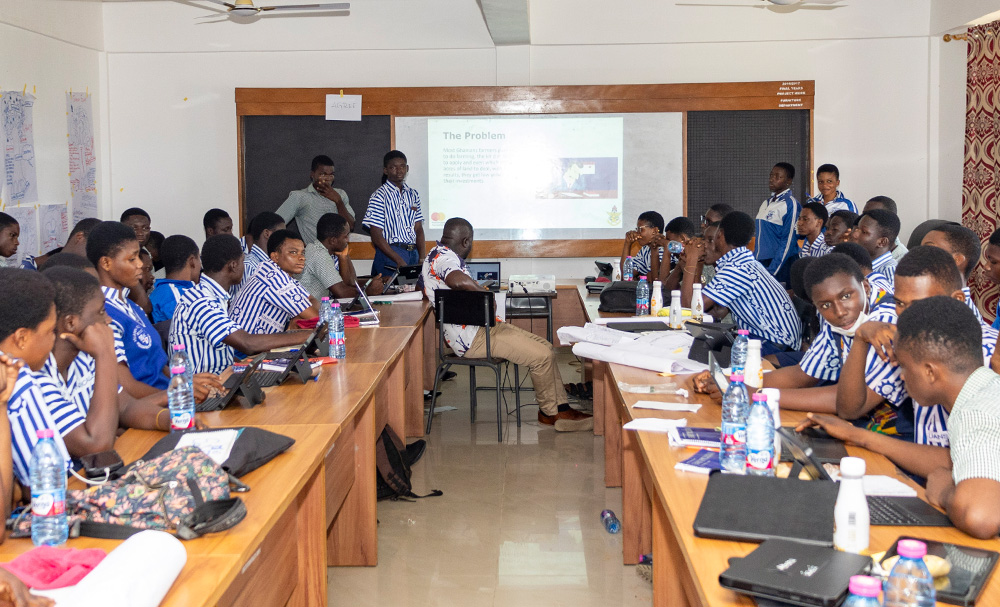
The Kwame Nkrumah University of Science and Technology, Kumasi Nutrition and Sustainable Agri-food Collaborative, in partnership with the Mastercard Foundation (Nkabom Collaborative), has concluded its 10-day transformative agribusiness training programme at Asuansi Technical Institute (ASUTECH) in the Central Region.
The intensive training equipped 120 participants with practical entrepreneurial, agribusiness and innovation skills aimed at transforming Ghana’s agricultural sector into an economically sustainable and innovation-driven industry.
Throughout the training, participants were introduced to practical business development tools, including problem tree analysis, design thinking, SWOT analysis, and business development.

One of the participants, Georgina Amoah, said the training had transformed the way she approaches problem-solving and innovation. She explained that learning the problem tree analysis has provided her with a systematic approach to identifying challenges, analysing their root causes and developing practical solutions.
"The problem tree has taught me how to identify a problem and develop practical solutions. We are applying the same approach to develop a disease detection solution that will help farmers identify crop diseases and recommend appropriate treatments," she said.
According to Georgina, her team's innovation was inspired by observations from the field, where many farmers struggle to accurately diagnose diseases affecting their crops, often resulting in reduced productivity. Their proposed solution seeks to provide farmers with an accessible tool capable of detecting crop diseases and recommending suitable interventions.

Another participant, Andy Joseph, noted that the programme had strengthened his understanding of idea generation and business planning, leading his team to develop an alternative flour product from cassava that addresses the high cost of imported wheat flour.
"Through the business planning sessions, we developed the idea of producing cassava flour as an alternative to wheat flour. Our goal is to provide bakers with a more affordable, nutritious and locally available option while reducing dependence on imported wheat," he explained.

Samuel Kweku Nyarko Arhinful, the Programme Associate of the Nkabom Collaborative commended the participants for their enthusiasm, creativity and commitment throughout the training. He encouraged them not to allow the knowledge acquired to end with the programme but to apply it in whichever entrepreneurial ventures they pursue.
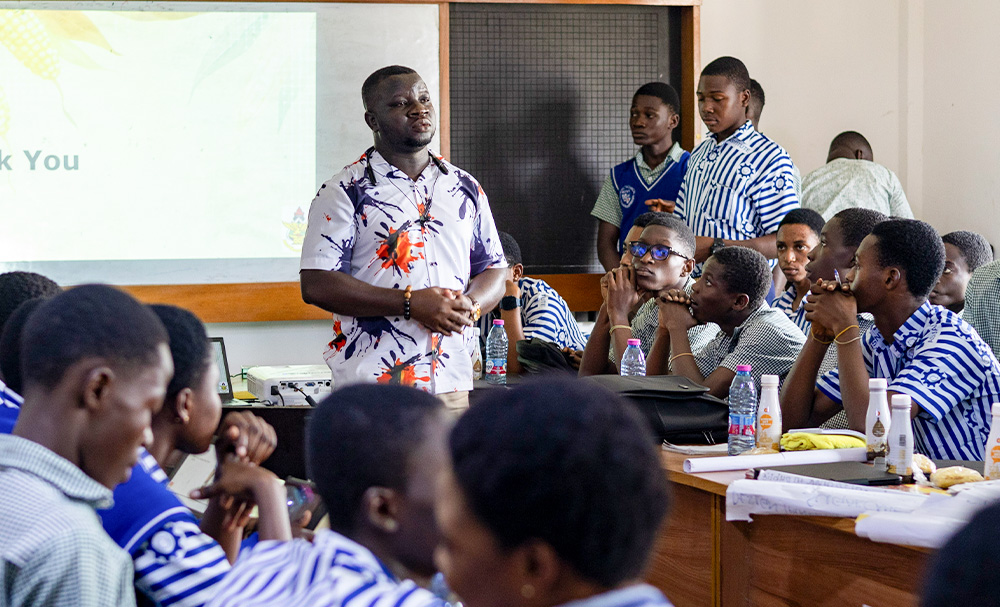
He encouraged participants to refine the business ideas they had developed and prepare for the Nkabom Collaborative's upcoming national pitching competition later this year, where outstanding innovations will have the opportunity to compete for funding support ranging from US$10,000 to US$15,000.
"Refine your ideas and come to the main pitching. Take advantage of the opportunity because funding support is available for outstanding ideas," he said.
Story: Michael Kwawu Photos: Michael Kwawu


